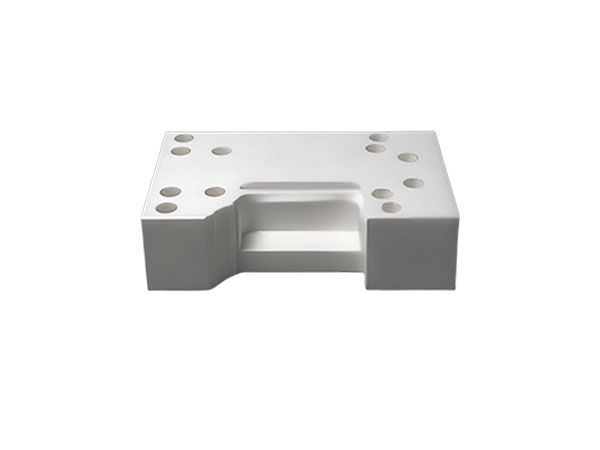
多孔性ジルコニアセラミック板の製品紹介
多孔性ジルコニアセラミックプレートは、二酸化ジルコニウム(zro)を主成分とし、特殊なプロセスによって多孔性構造を形成する高性能セラミックス材料です。高密度ジルコニアセラミックスと比較して、そのコア特性は以下のとおりです。
1. 多孔构造を用いる構造特徴:取りつくになり0.6%-63%の範囲である場合で、調整多孔质と毛穴サイズ8 ~μm。
2. 物理的性質:高融点(2715℃)、高硬度(hv1250)、ジルコニア材料の優れた靭性を保持する。
3. 機能特性:適度な通気性、通風性、優れた断熱性を示します。
4. 化学的安定性:酸性、アルカリ性、有機溶媒環境で安定性を示し、耐食性に優れています。
Preparation processes and techniques
The main methods for preparing porous zirconia ceramics include:
Process type | Technical Features | Applicable scenarios |
Adding pore-forming agents method | Pores are formed using pore-forming agents such as starch, resulting in a simple and easily controllable process. | Conventional porous ceramic preparation |
Foaming process | Gases are generated through chemical reactions to form a closed-cell structure. | High porosity materials |
Organic foam impregnation | An open-pore structure is formed using organic foam as a template. | High porosity foam ceramics |
Sol-gel method | Forms nanoscale pores with a uniform structure. | Preparation of microporous ceramics |
Supports custom specifications.